

SODIC. Real Estate Customer Experience Strategy for Enhanced Engagement and Satisfaction
Developed a CX strategy for SODIC, identifying eight customer types, conducting 46 stakeholder sessions, and addressing 400+ pain points across 76 customer journey steps. The strategy included customer segmentation, a VoC program, and governance model implementation, leading to significant improvements in customer satisfaction and loyalty.
01 —The Impact
The results, up front.
Enhanced Customer Understanding : Deeper insights into customer needs enabled targeted engagement strategies. Improved Customer Touchpoints : Streamlined communication channels resulted in a seamless experience. Increased Customer Loyalty : Tailored initiatives fostered greater customer loyalty and advocacy. Effective Governance and Continuous Improvement : The governance model ensured ongoing oversight and refinement of CX initiatives. Successful Implementation of VoC Program and App Development : Enhanced customer feedback collection and engagement strengthened SODIC’s customer-centric approach.
02 — The Challenge
Where they started.
CX Maturity Assessment : Evaluating SODIC’s current state across various dimensions to identify gaps and areas for improvement. Stakeholder Engagement : Conducting 46 interviews and workshops with key stakeholders to gather insights and align on the strategic vision. Market Analysis and Benchmarking : Analyzing digital insights and customer behaviors in the Egyptian market, including social media usage patterns and main reasons for customer engagement. Customer Segmentation : Identifying and prioritizing customer segments based on their needs, drivers, barriers, actions, and services sought, covering residential, commercial, and mixed-use property investors, as well as dormant owners and indirect tenants. Strategy Development : Creating a detailed CX strategy that includes a value proposition, route to customers, VoC program, and a one-stop-shop app. Governance Model and Implementation Plan : Establishing a CX governance model and a phased implementation plan with clear roles, responsibilities, and timelines.
03 —What We Did
The work.
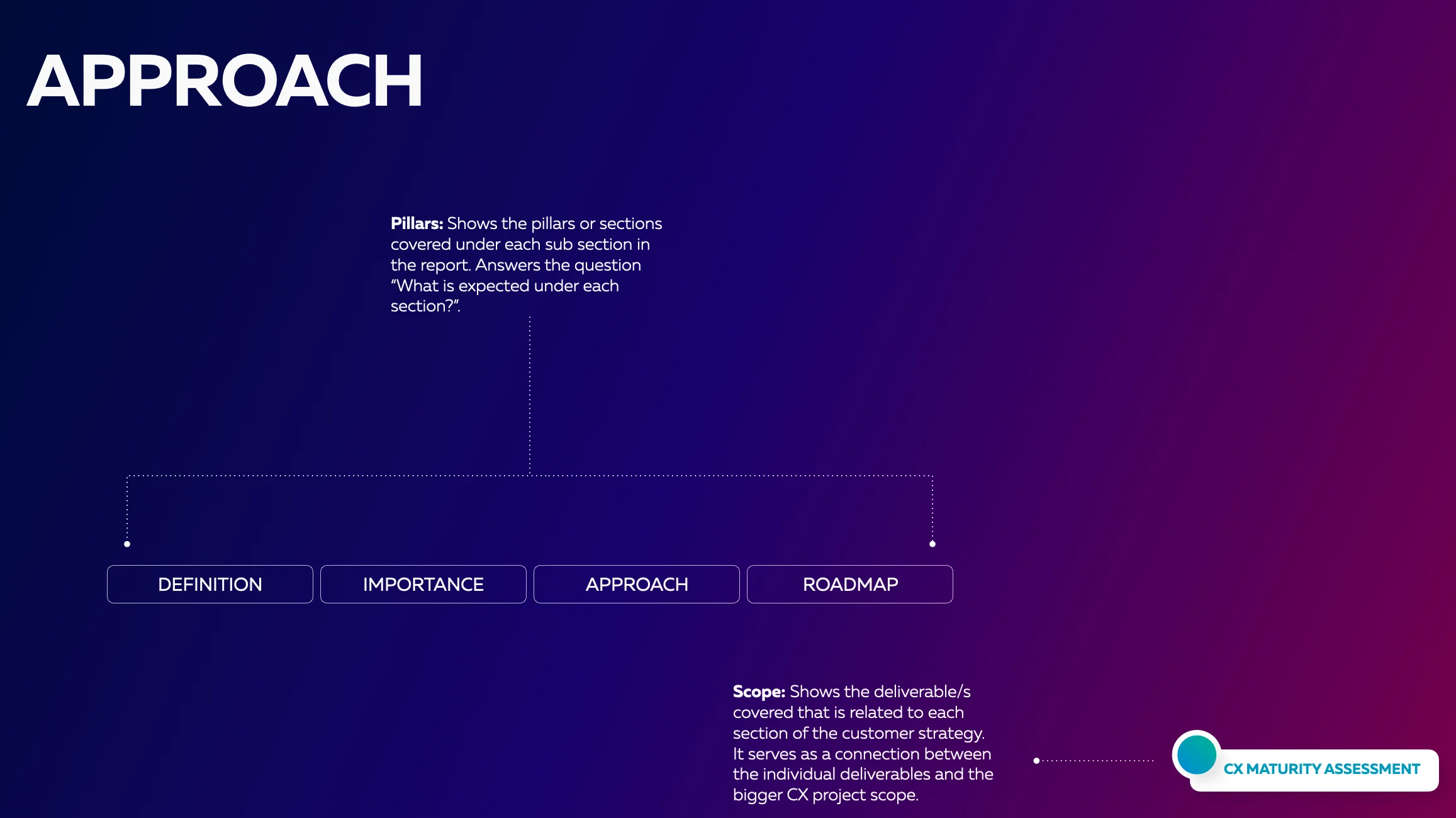
CX Maturity Assessment
We conducted a bespoke CX maturity assessment focusing on: Customer Understanding : Analyzing SODIC’s depth of customer insights and alignment with evolving needs.
Value Proposition and Offerings
Evaluating how well SODIC’s products meet customer expectations.
Route to Customer
Assessing the effectiveness of customer touchpoints and communication channels.
Capabilities and Culture
Reviewing internal capabilities to support a customer-centric approach.
Execution
Measuring the effectiveness of current CX initiatives.
Stakeholder Engagement
Engaged SODIC’s leadership through 46 interviews and workshops, fostering alignment on strategic vision and identifying customer pain points.
Market Analysis and Benchmarking
Detailed analysis focused on: Social Media Usage : Understanding the most used platforms and reasons for customer engagement.
Customer Behavior Trends
Analyzing preferences to inform strategy development.
04 — Approach & Methodology
How we got there.
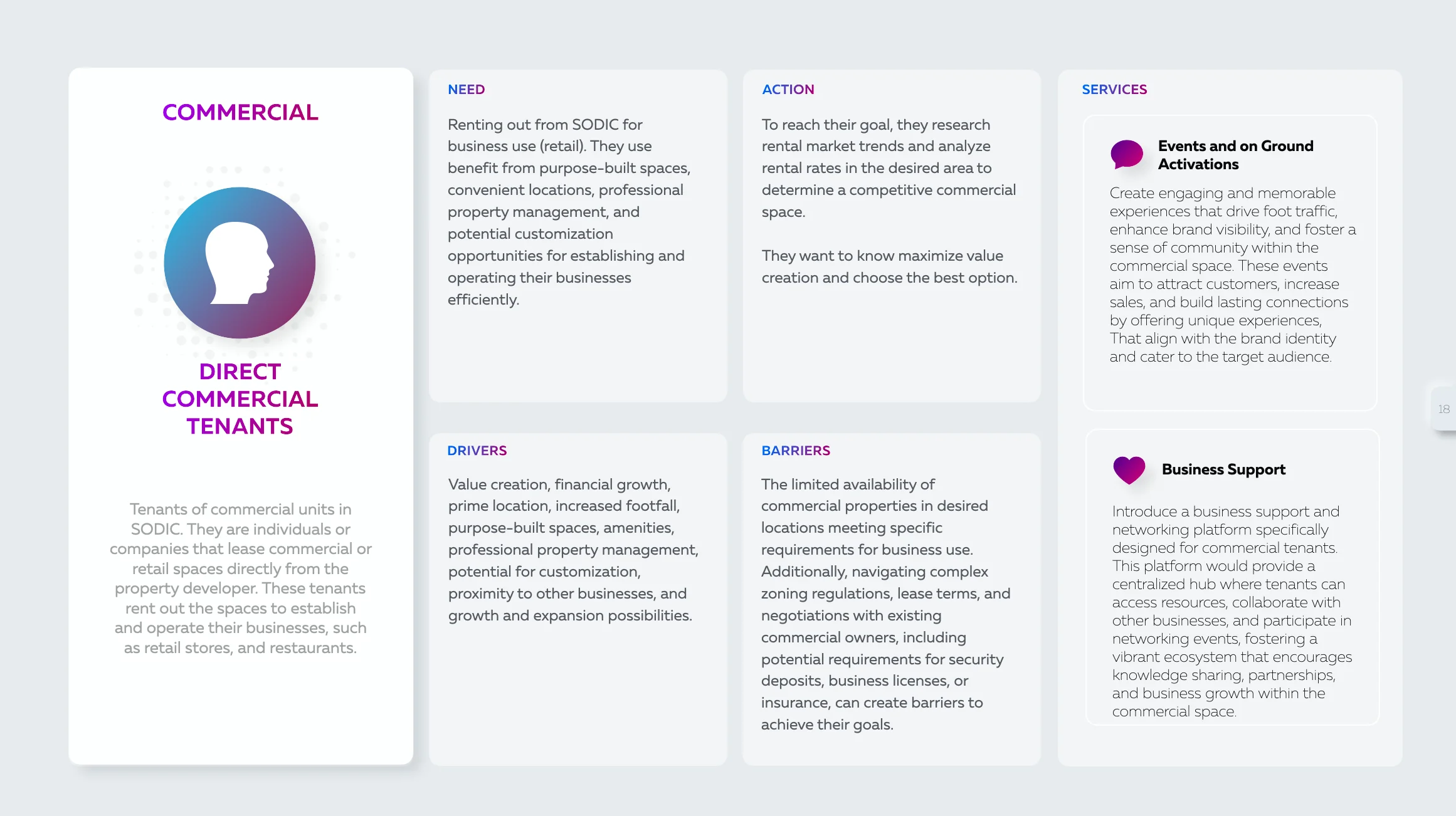
Customer Segmentation : Conducted segmentation, defining distinct groups such as: Residential Customers : Buyers and tenants of residential properties.
Commercial Customers : Businesses and investors in commercial properties.
Mixed-Use Property Investors : Investors in both residential and commercial properties.
Dormant Owners : Those who own but do not actively use properties.
Indirect Tenants : Indirectly involved with residential and commercial spaces.
This segmentation allowed us to tailor the CX strategy for specific customer groups.
Strategy Development : Developed a CX strategy including: Value Proposition : “At SODIC, we deliver on our promise, creating diversity to fulfill different customer needs.”
Route to Customers : Streamlined approach to touchpoints and communications.
VoC Program : Real-time program to gather and act on customer feedback.
One-Stop Shop App : An app designed to provide a seamless customer experience across various stages.
Governance Model : Established a governance model with elements such as: Leadership & Accountability : Defined roles for CX leadership.
Strategy & Planning : Developed a strategic plan aligned with business goals.
Policies & Guidelines : Created consistent CX policies.
Metrics & Measurement : Implemented metrics to measure CX effectiveness.
Technology Recommendations : Identified the best technologies for project management, survey collection, feedback analysis, and reporting.
Best Practices for CX Excellence : Provided guidelines covering company culture, staff involvement, organizational structure, and data usage.
05 —In Practice
Project samples.




Keep exploring Renascence
Your turn
Ready to write your own success story?
Book a discovery call and see what behavioral CX can do for your business.