Wasl. Voice of Customer (VOC) Strategy Development
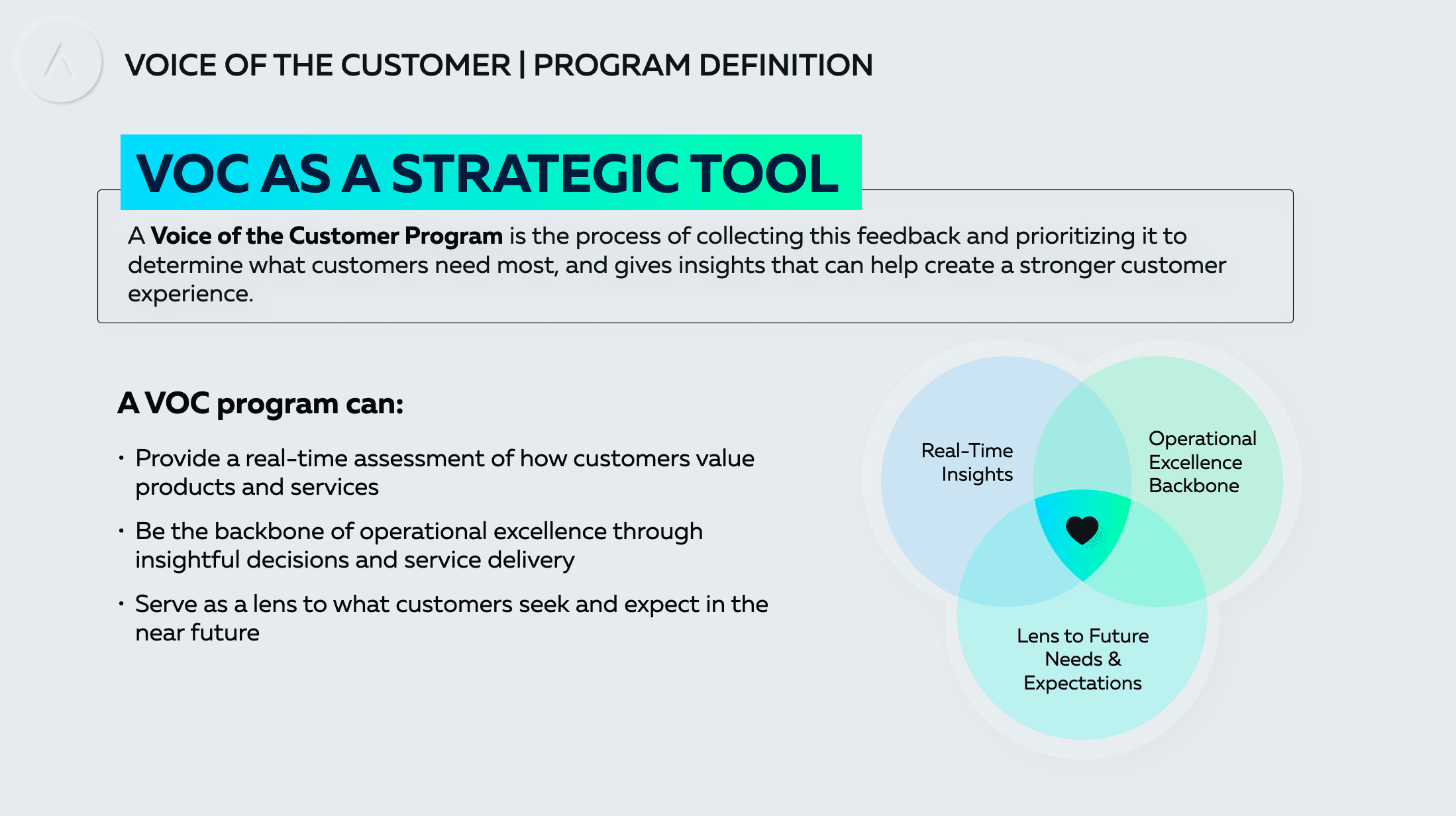
Implemented a Voice of Customer (VOC) strategy for Wasl, analyzing four distinct customer types and covering 100+ touchpoints across customer journeys. A closed feedback loop was established to drive continuous customer insights, enhance service delivery, and improve overall satisfaction.
01 —The Impact
The results, up front.
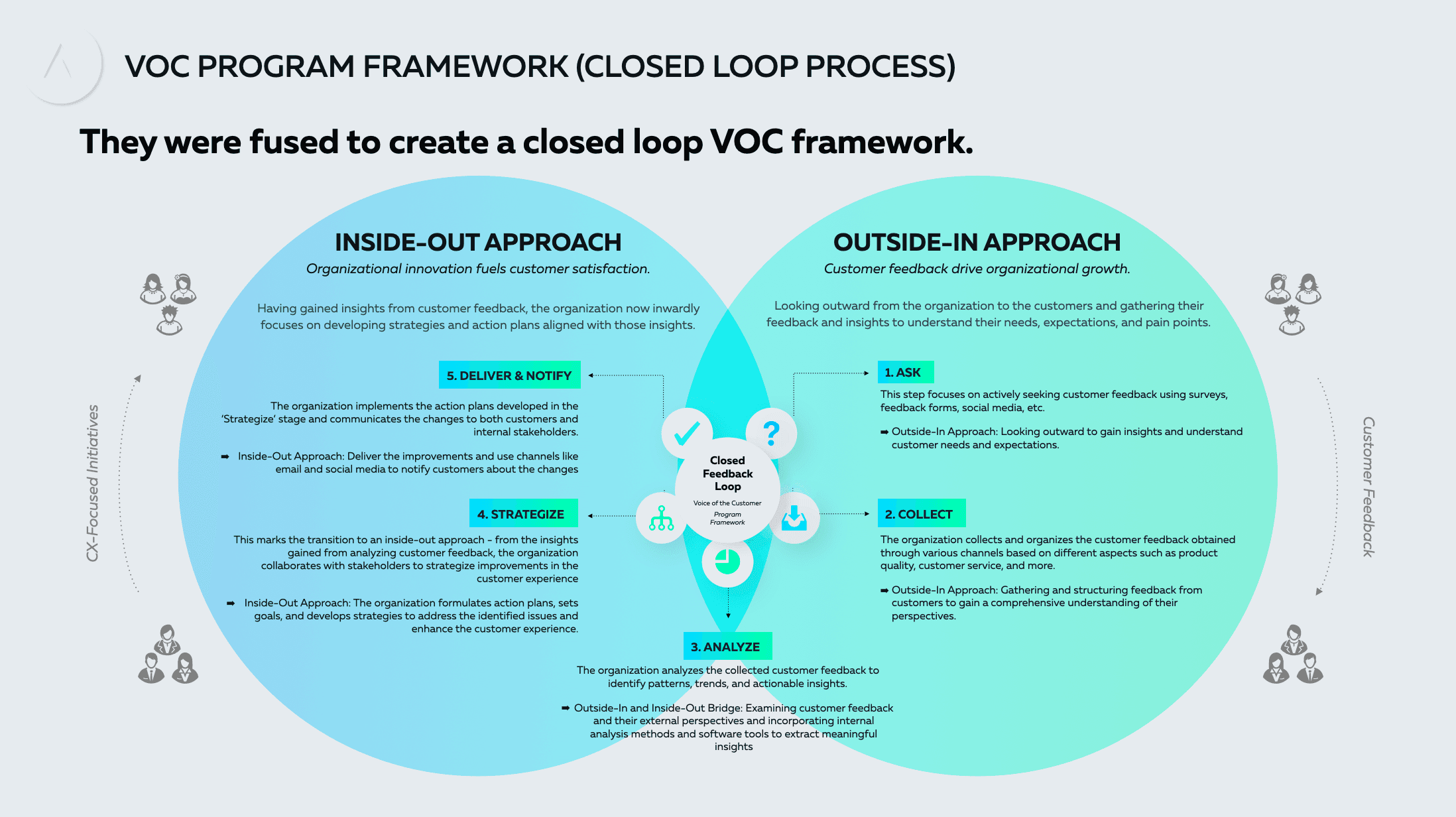
VOC Program : The program integrated both inside-out and outside-in feedback approaches, creating a closed feedback loop that enabled Wasl to gather holistic insights from customers and employees alike. This dual approach ensured that all perspectives were considered in the decision-making process, leading to more informed and customer-centric strategies. Enhanced Customer Engagement : The strategic placement of feedback mechanisms throughout the customer journey led to increased engagement. Customers felt more heard and valued, resulting in higher response rates and more detailed feedback. This engagement helped Wasl build stronger relationships with its customers and foster loyalty. Actionable Insights : The program generated clear, actionable insights that were directly linked to specific customer touchpoints. These insights enabled Wasl to make targeted improvements in service delivery, addressing common pain points and exceeding customer expectations. Structured Implementation Plan : The detailed Gantt chart provided a clear roadmap for executing the VOC strategy, with defined initiatives, timelines, and responsibilities. This structure helped Wasl prioritize actions, allocate resources effectively, and track progress against predefined goals. Data-Driven Decision Making : The research and data analysis provided Wasl with a solid foundation for making data-driven decisions. This shift towards leveraging customer feedback in strategic planning helped the organization become more agile and responsive to customer needs. Improved Service Delivery : As a result of the implemented changes, Wasl saw improvements in key service delivery areas, such as faster response times, better issue resolution, and more personalized customer interactions. This not only boosted customer satisfaction but also positioned Wasl as a more customer-centric organization. In-Depth Research Documentation : An extensive appendix was provided, containing detailed research on VOC metrics, customer journey maps, and benchmarking analysis. This documentation served as a valuable resource for Wasl’s CX team, enabling them to reference best practices and continue refining the VOC program over time.
02 — The Challenge
Where they started.
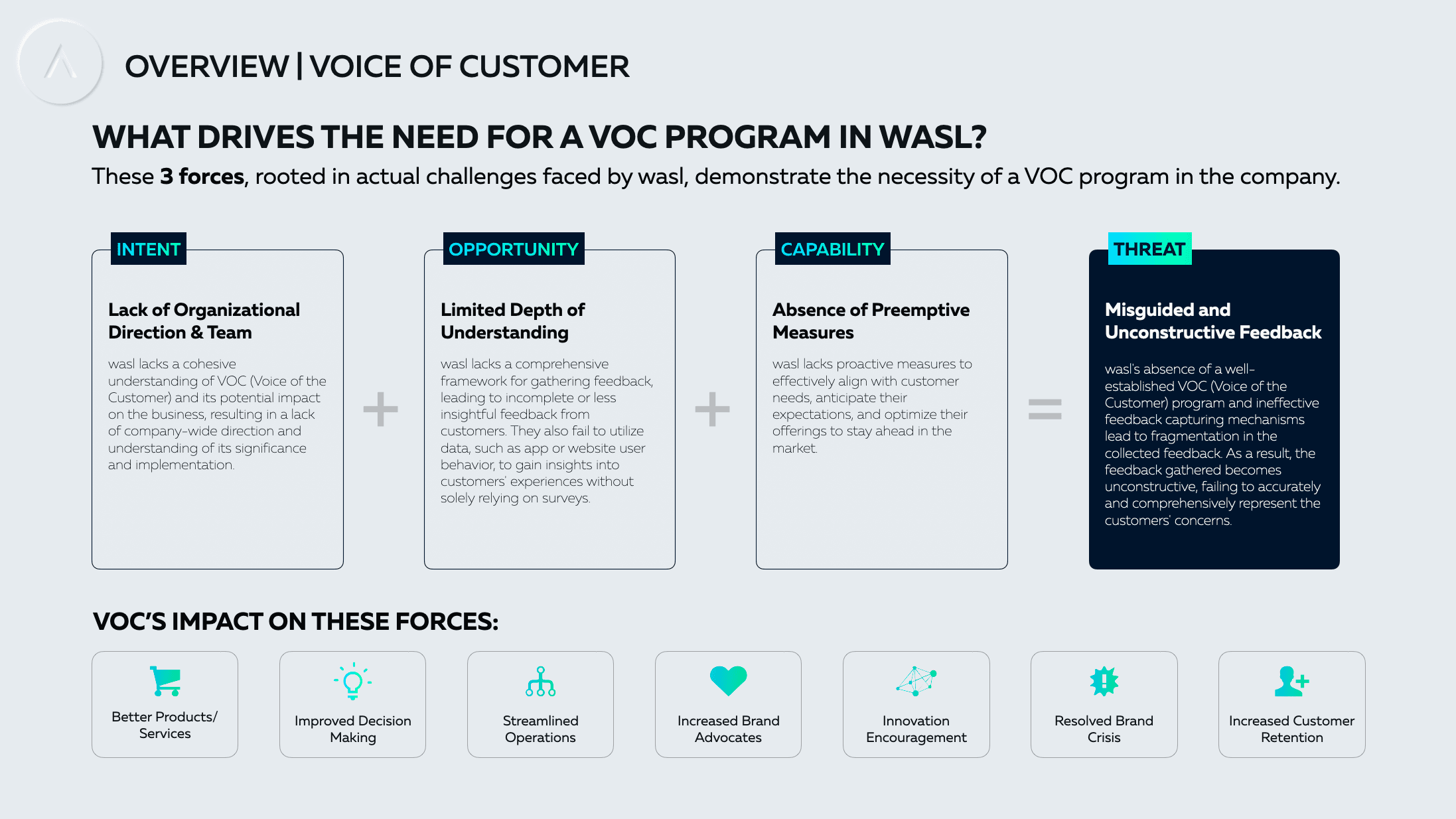
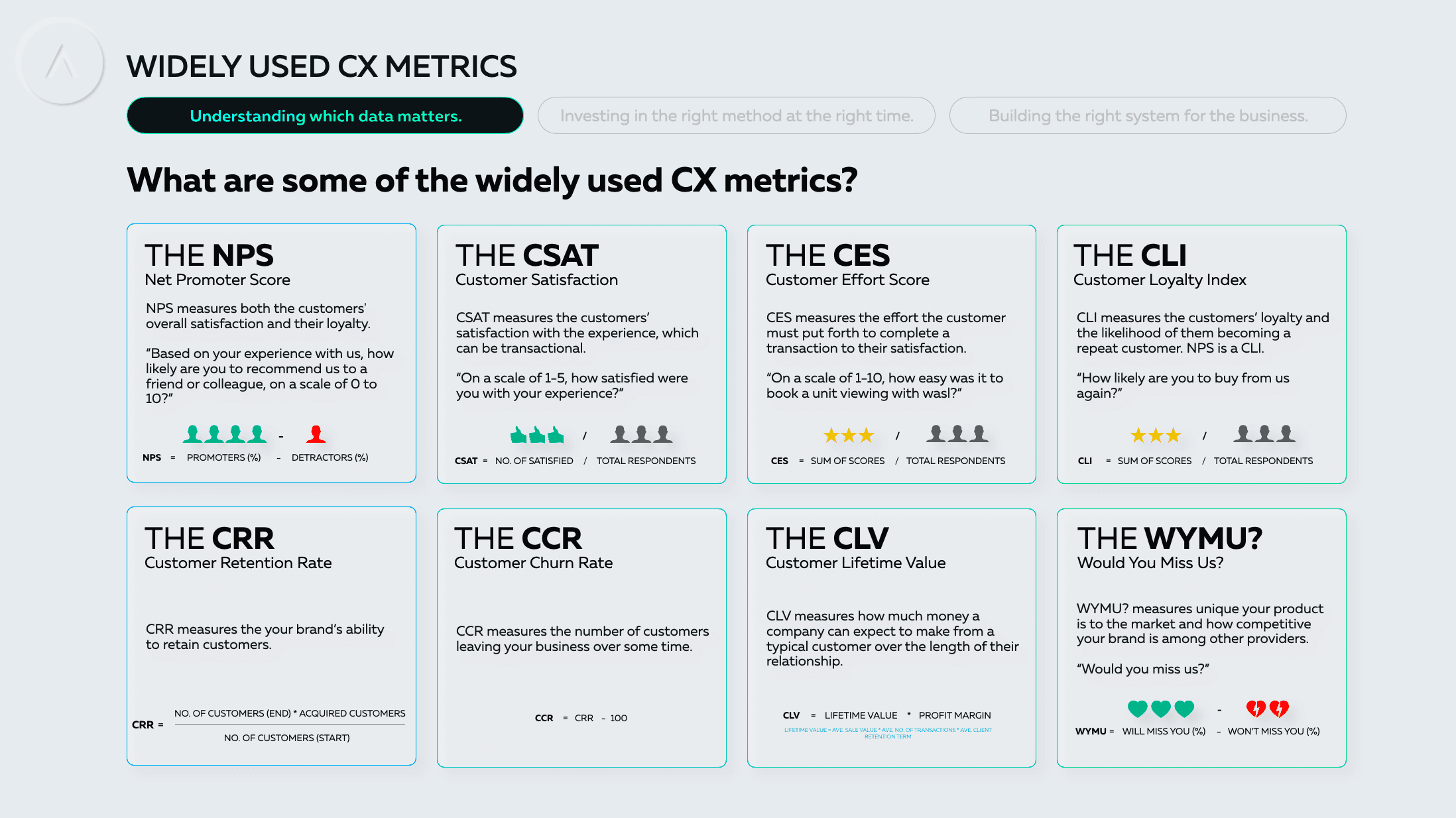
We began the project by defining the concept of Voice of Customer (VOC) and its importance for Wasl. The aim was to use VOC to gain valuable customer insights, enhance engagement, and improve service delivery. We focused on key CX metrics—NPS, CSAT, and CES—to guide the program design and selected a closed feedback loop to capture customer perspectives.
03 —What We Did
The work.
Customer Journey Analysis
We conducted a thorough analysis of Wasl’s customer journey to pinpoint the most critical touchpoints where feedback should be collected. This included stages such as initial inquiry, service delivery, and post-service follow-up. Understanding these key moments allowed us to strategically place feedback mechanisms to capture customer sentiment in real time.
Question Design
To ensure meaningful feedback, we developed targeted questions for each touchpoint. These questions were designed to be concise and relevant, focusing on specific experiences and expectations. By customizing the questions to fit each stage of the customer journey, we ensured that the feedback collected would be both insightful and actionable.
Data Collection Methods
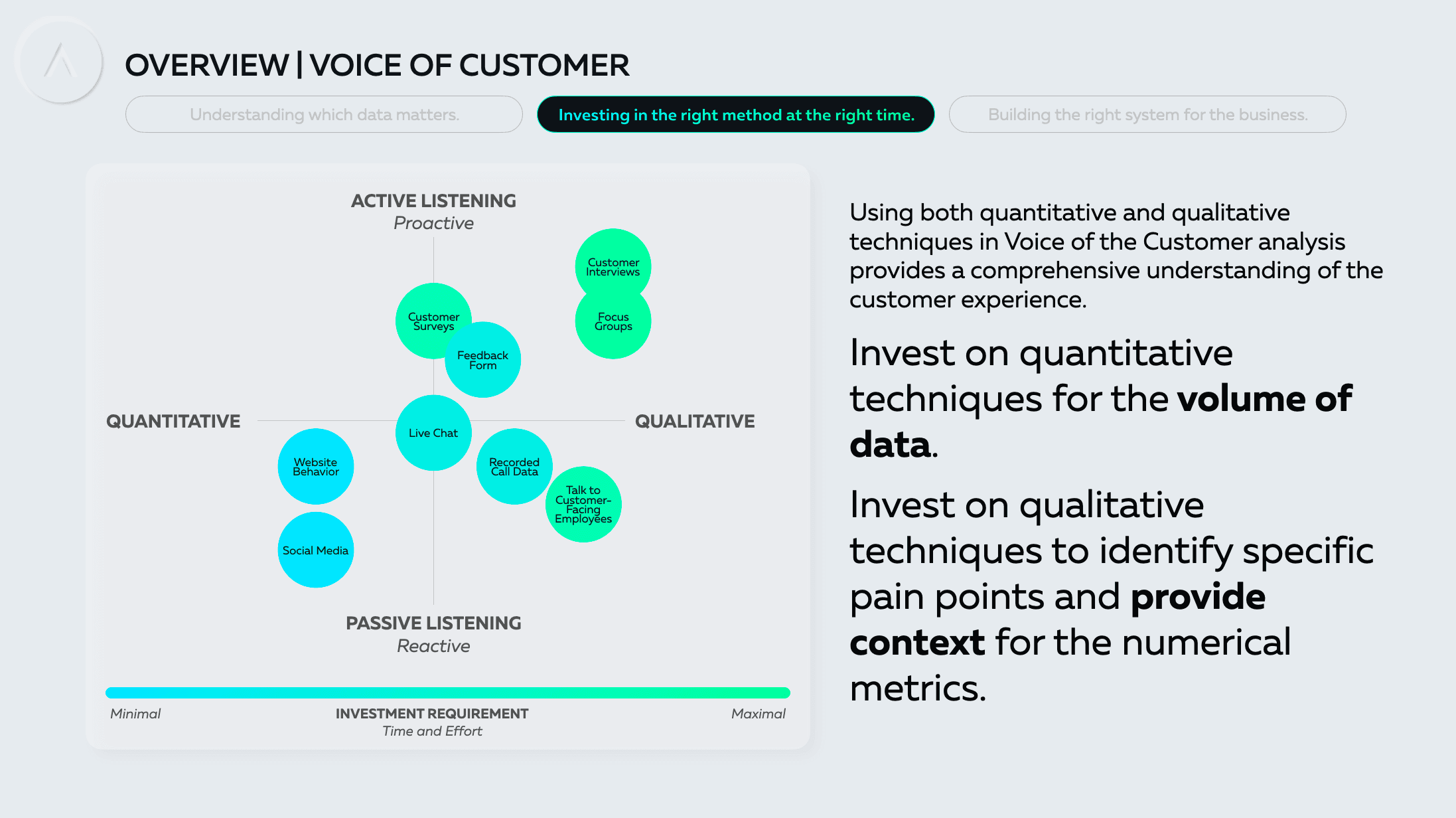
We recommended a mix of data collection methods, including online surveys, phone interviews, and in-person feedback forms. This multi-channel approach was tailored to Wasl’s diverse customer base, ensuring high response rates and data collection.
Software Selection
After evaluating various VOC software solutions, we selected the most suitable tools for Wasl’s needs. The chosen software supported real-time data collection, automated reporting, and advanced analytics, enabling a seamless feedback process.
Data Analysis
We outlined a structured approach for analyzing the collected data. This involved categorizing feedback into themes, identifying patterns, and using sentiment analysis to gauge customer emotions. We also recommended using dashboards and visualization tools to present insights clearly and effectively to stakeholders.
Insight Generation
Based on the analyzed data, we developed actionable insights and recommendations. Each insight was linked to specific customer touchpoints and included suggested improvements, ensuring that the insights could be directly applied to enhance customer experience.
CX Committee
We emphasized the importance of establishing a dedicated CX committee within Wasl to oversee the implementation of VOC insights. This committee would be responsible for prioritizing actions, allocating resources, and monitoring progress to ensure continuous improvement.
Implementation
We provided a step-by-step implementation plan, detailing how to apply the insights gathered from VOC data. This plan included timelines, responsible teams, and specific actions to be taken at each customer touchpoint.
04 — Approach & Methodology
How we got there.
A Gantt chart was created to outline the phases and timelines of the VOC program, detailing each initiative’s budget, timeline, approach, and success criteria.
05 —In Practice
Project samples.

Keep exploring Renascence
Your turn
Ready to write your own success story?
Book a discovery call and see what behavioral CX can do for your business.